The spread of the Asian hornet (Vespa velutina), also known as the yellow-legged hornet, continues to be a growing concern across the UK. While it has not yet become fully established, recent data shows a clear increase in sightings and nest discoveries — raising important questions for homeowners, businesses, and beekeepers in Cornwall.
At D Cornish Pest Control, we’re keeping a close eye on developments so you know exactly what to look out for and how to respond.
📈 Asian Hornet Sightings in the UK: The Latest
The most recent data highlights a noticeable rise in activity:
- 2025 saw record numbers, with over 500 sightings reported
- More than 160 nests were identified and destroyed
- Sightings are no longer limited to the south-east and are gradually spreading
So far in 2026, confirmed sightings remain relatively low — but this is typical for early in the season. Numbers tend to increase significantly through late summer and early autumn.
🧭 Are Asian Hornets Established in the UK?
At present, the Asian hornet is not fully established in the UK.
However, the situation is changing:
- Hornets are arriving more frequently from mainland Europe
- There is evidence that some queens are surviving UK winters
- The geographical spread is slowly widening
This means the UK is approaching a critical tipping point, where permanent populations could become established if not carefully controlled.
📍 What About Cornwall?
For Cornwall, the risk is real — but currently lower than in other parts of the UK.
Because of our coastal location, Asian hornets can:
- Arrive via wind-assisted migration from France
- Potentially be transported through freight and vehicles
Although confirmed cases locally remain limited, vigilance is key — particularly during the warmer months.
⚠️ Why Asian Hornets Are a Problem
Asian hornets pose a serious threat to:
🐝 Honey Bees and Pollinators
They are highly efficient predators, capable of decimating bee colonies and impacting biodiversity.
🌿 Local Ecosystems
A single nest can consume thousands of insects, disrupting the natural balance.
🏡 Homes and Businesses
While they are not typically aggressive unless disturbed, nests near properties can pose a safety risk.
🔍 How to Identify an Asian Hornet
It’s important not to confuse them with native hornets.
Key features include:
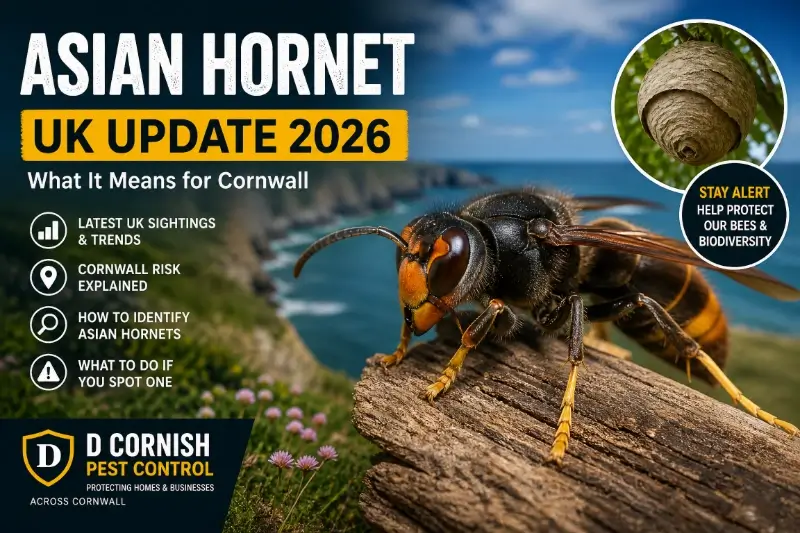
- Mostly dark body (almost black)
- Bright yellow/orange band on the abdomen
- Distinctive yellow legs (hence “yellow-legged hornet”)
- Slightly smaller than the native European hornet
If you’re unsure, it’s always best to seek professional advice rather than approach the insect yourself.
🚫 What to Do If You Spot One
If you think you’ve seen an Asian hornet:
- Do not attempt to approach or destroy it
- Take a photo if safe to do so
- Report it via the official UK reporting system or contact a professional
Early reporting is critical — it allows authorities to track and destroy nests before they spread.
🛠️ Professional Help in Cornwall
At D Cornish Pest Control, we provide expert support for:
- Hornet identification
- Nest assessments
- Safe and compliant removal where required
We stay up to date with the latest guidance to ensure your property and the local environment are protected.
✅ Final Thoughts
The Asian hornet situation in the UK is evolving. While not yet fully established, the increase in sightings shows that the risk is growing.
For Cornwall residents and businesses, awareness and early action are the best defence.
📞 Need Advice or Support?
If you’re concerned about a hornet sighting or nest on your property, contact D Cornish Pest Control today for professional guidance.