
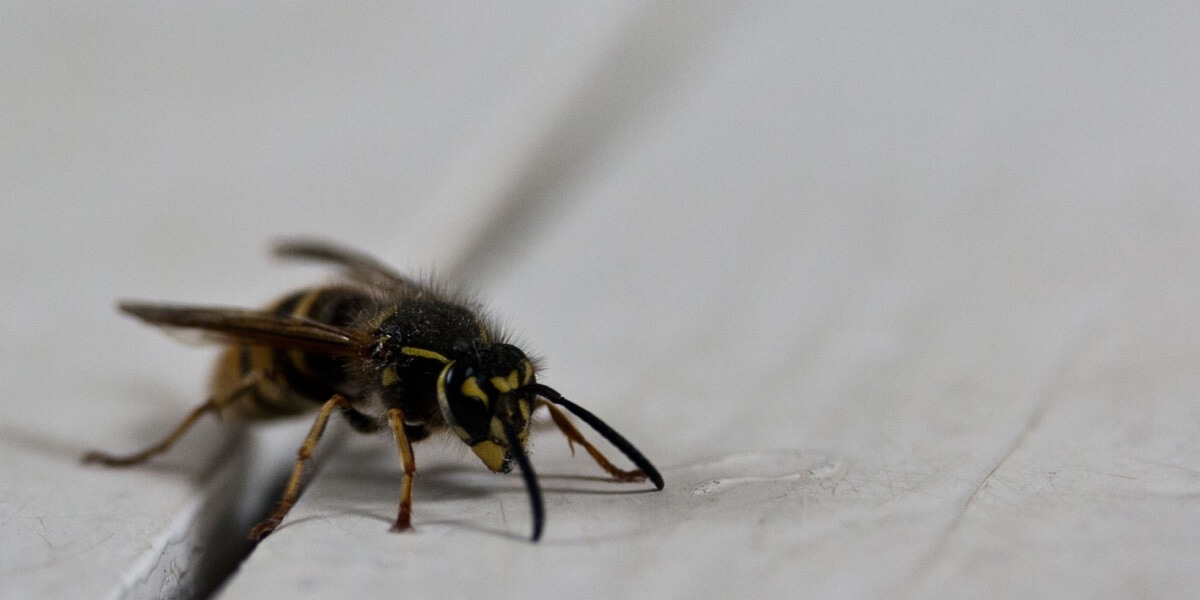
What are they?:
Wasps come in various shapes and sizes. Some wasps are solitary, others thrive in large colonies. Some wasps survive entirely on nectar, but others are parasitic and will attack other insects. They have a painful sting, and unlike bees, wasps do not leave their stingers behind which means they can sting many times – which can make them a particularly painful pests.
Signs that you have an issue:
Wasp nests are usually built in sheltered areas and are made from chewed wood pulp and saliva. They are often located in roof voids, under eaves, or in sheds and garages.
Wasp activity around these areas is a good clue that you may have a nest . . . . and a problem.
WE STRONGLY RECOMMEND THAT YOU DO NOT ATTEMPT TO REMOVE A WASP NEST YOURSELF
Provoking wasps can be a danger to yourself and those around you.
How we would treat it:
Proprietary residual spraying and nest removal. D Cornish Pest Control is well practiced and has all of the necessary equipment and protective wear to safely remove, treat and make good.
Frequency of treatment:
One treatment should usually cure a current infestation. Future prevention can involve sealing cracks and crevices.
Chemicals used details / handling:
All chemicals are licensed under EU and UK legislation.